
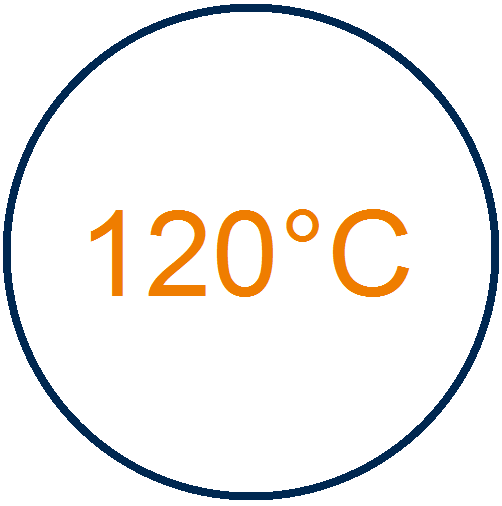
Heat Class E up to 120°
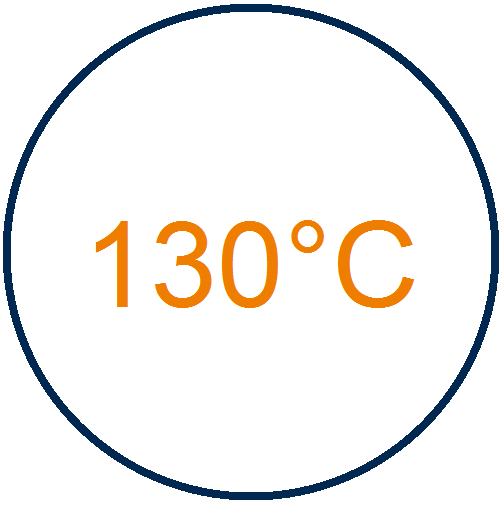
Heat Class B up to 130°
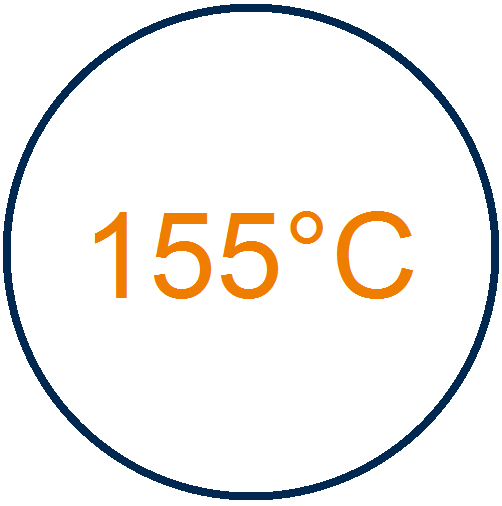
Heat Class F up to 155°
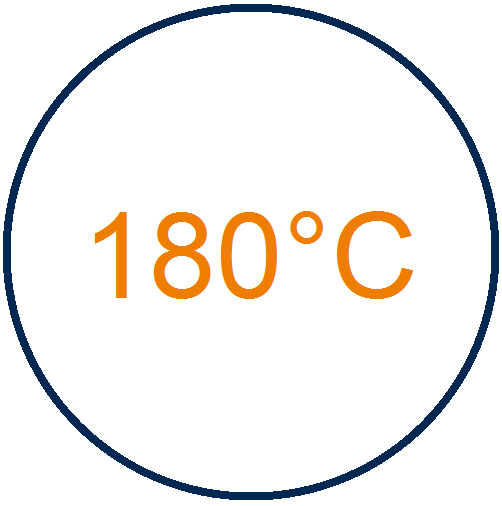
Heat Class H up to 180°
Standards such as IEC 60216 define a maximum permissible operating temperature for materials used for insulation in electrical engineering. A commonly used criterion for classification into the appropriate temperature class is the breakdown voltage. After 20,000 hours at the maximum operating temperature (temperature class), it must still be 50% of the initial value.
However, the temperature classes do not specify the maximum short-term exposure temperature. This is usually significantly higher (e.g., polyester at about 220°C for 30 minutes; Kapton approx. 400°C/hour). In non-electrical applications involving only short-term high-temperature exposure, materials with a low continuous temperature resistance can therefore often be used.
For our electrical insulation tapes, we use only films, fabrics, and nonwovens manufactured specifically for these applications. Due to their production methods and design, they meet the requirements of electrical engineering. The adhesives used are suitable for electrical engineering and do not chemically attack other plastics or, for example, enamel-insulated wires. Many electrical insulation tapes are UL-listed (E 93622).
In addition to the product line shown here, we offer a large number of other, custom-designed adhesive tapes – If you’re interested, please contact us!
| Max. temperature |
UL 1446 |
IEC 60085 |
Max. temperature |
| – | – | Y | 90°C |
| – | – | A | 105°C |
| – | – | E | 120°C |
| 130°C | B | B | 130°C |
| 155°C | F | F | 155°C |
| 180°C | H | H | 180°C |
| 200°C | N | 200 | 200°C |
| 220°C | R | 220 | 220°C |
| 240°C | S | 250 | 250°C |